Morphological and Physiological Characterization of Streptomyces silvae TMS4I1
Experimental characterization shows that S. silvae TMS4I1 combines characteristic streptomycete morphology with broad tolerance to multiple environmental stress conditions.
This page integrates colony morphology, scanning electron microscopy, and physiological assays to summarize growth behavior, structural traits, and environmental adaptability of the strain.
Key findings
Streptomycete morphology
TMS4I1 shows characteristic colony differentiation and filamentous hyphal growth consistent with typical streptomycete morphology.
Broad temperature tolerance
Growth was observed across a wide temperature range from 7–37 °C.
pH and salt adaptability
The strain tolerates pH conditions from pH 2–10 and NaCl concentrations up to 10 %.
Robust stress profile
Lysozyme resistance and pronounced β-hemolytic activity underline the physiological resilience of the strain.
Overview
- Macro- and micromorphology
- Salt tolerance
- Hemolytic activity
- Lysozyme resistance
- Temperature optimum
- pH tolerance
Macro- and micromorphology
Colony morphology was documented on standardized media to capture medium-dependent differences in pigmentation, aerial mycelium formation, and colony architecture. Scanning electron microscopy complements these observations by visualizing filamentous growth and microstructural features.
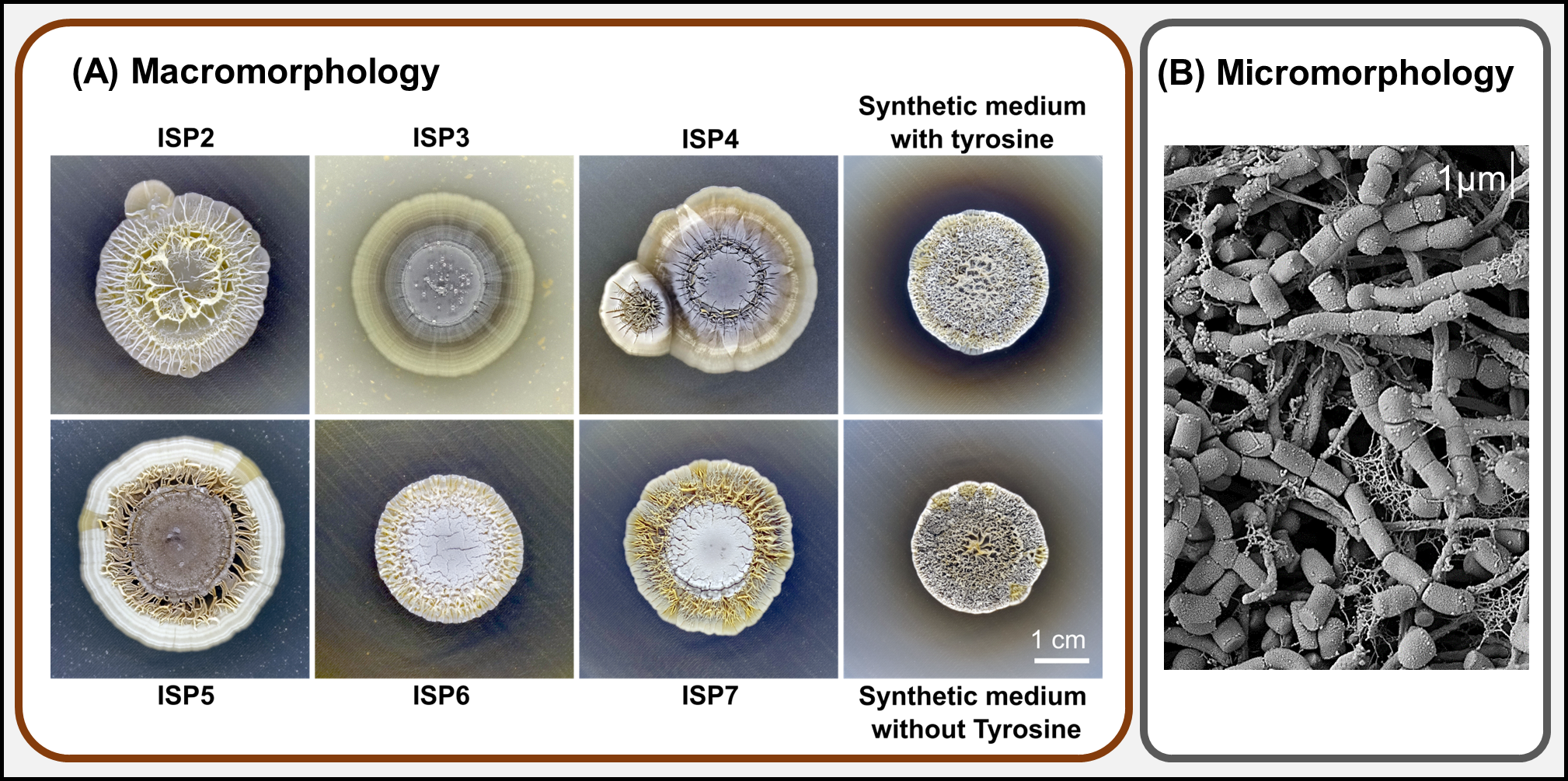
Colony morphology varies with cultivation medium, including visible differences in pigmentation, surface structure, and colony architecture.
SEM imaging reveals filamentous hyphae and differentiated microscopic features characteristic of streptomycetes.
Physiological characterization and stress tolerance
To assess environmental adaptability, TMS4I1 was tested under multiple stress-related conditions including salt exposure, lysozyme treatment, temperature variation, pH variation, and hemolytic activity assays.
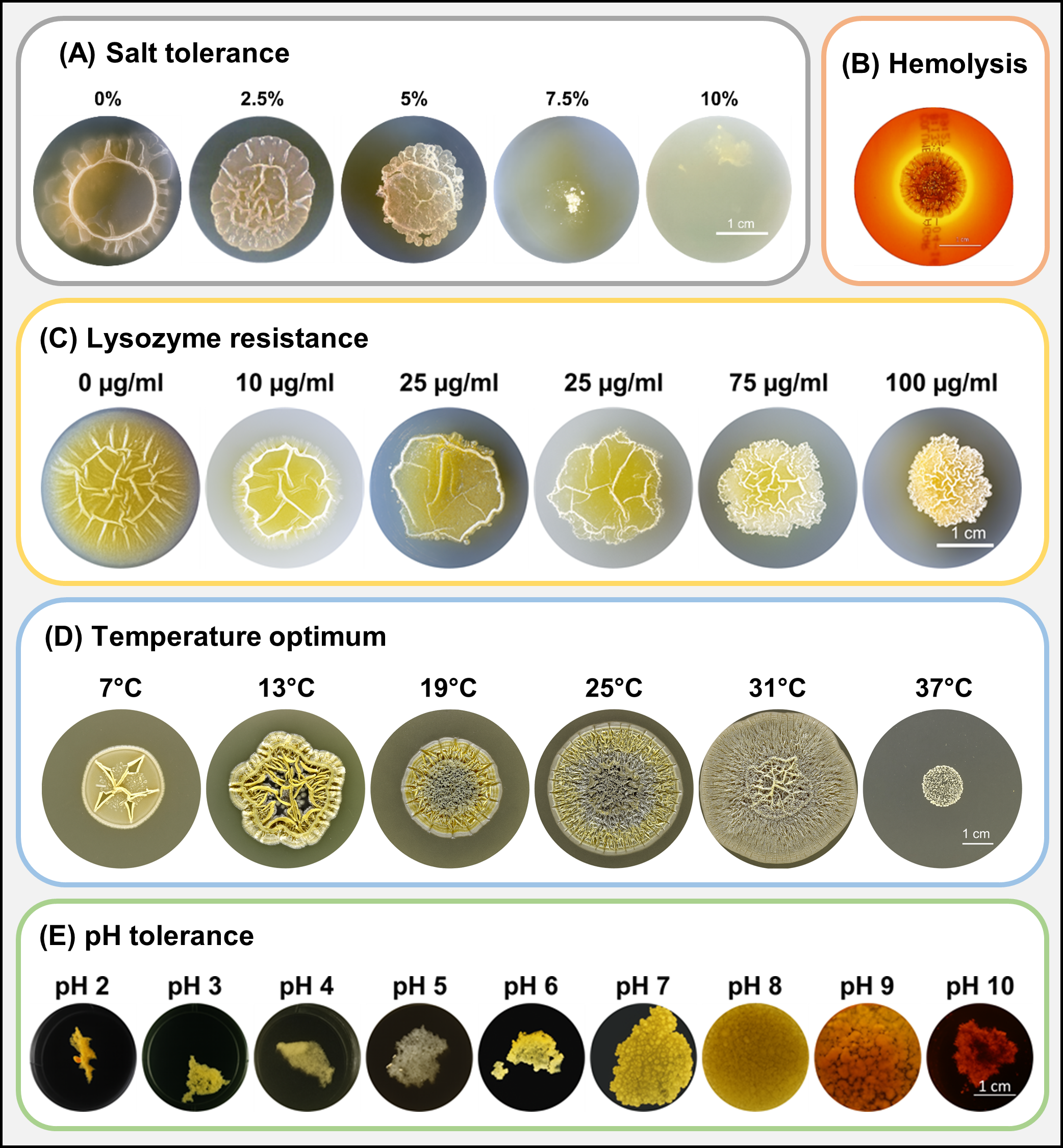
The strain grows across a broad range of salt concentrations, temperatures, and pH conditions, indicating substantial ecological flexibility.
Lysozyme resistance and pronounced β-hemolytic activity reinforce the robust physiological profile of TMS4I1.
The combined morphological and physiological data show that S. silvae TMS4I1 displays both characteristic streptomycete colony and hyphal morphology and broad tolerance to variable environmental conditions. Growth across a wide range of temperature, salt, and pH conditions, together with lysozyme resistance and β-hemolytic activity, supports the view that this strain is physiologically adaptable and robust under changing conditions.