Comparative Genomics of Streptomyces silvae
Comparative genome analysis shows that the investigated strains form a coherent S. silvae species cluster while differing in chromosome structure and biosynthetic repertoire.
This page integrates Average Nucleotide Identity (ANI), genome-wide synteny analysis with progressiveMauve, and antiSMASH-based BGC comparison to distinguish species-level coherence from strain-level diversification.
Key findings
Species coherence
Pairwise ANI values range from 96.65 % to 100 %, remaining above the accepted 95 % species threshold.
Conserved synteny
Whole-genome alignment shows broad conservation of chromosome structure across the clade.
Structural variation
Local rearrangements and inversions reveal clear intraspecific diversification, most prominently in gb1(2016).
Biosynthetic diversification
The genomes share a conserved biosynthetic core but differ in several strain-specific or weakly characterized BGCs.
Dataset
- S. silvae For3T – type strain
- Streptomyces sp. M3
- S. silvae TMS4I1
- S. silvae TMS12I2
- Streptomyces sp. gb1(2016)
- Streptomyces sp. ADI93-02
- Streptomyces sp. LamerLS–316
- Streptomyces sp. SID4921
Average Nucleotide Identity (ANI)
ANI analysis confirms that all investigated genomes belong to the same S. silvae species-level cluster, while still retaining measurable internal diversity.

ANI values support a taxonomically stable species group with strong overall sequence conservation.
The genomes are closely related but not identical, indicating meaningful intraspecific diversification rather than species-level separation.
Genome synteny and structural variation
progressiveMauve alignment reveals extensive synteny across the S. silvae clade together with local rearrangements, inversions, and strain-specific structural changes.
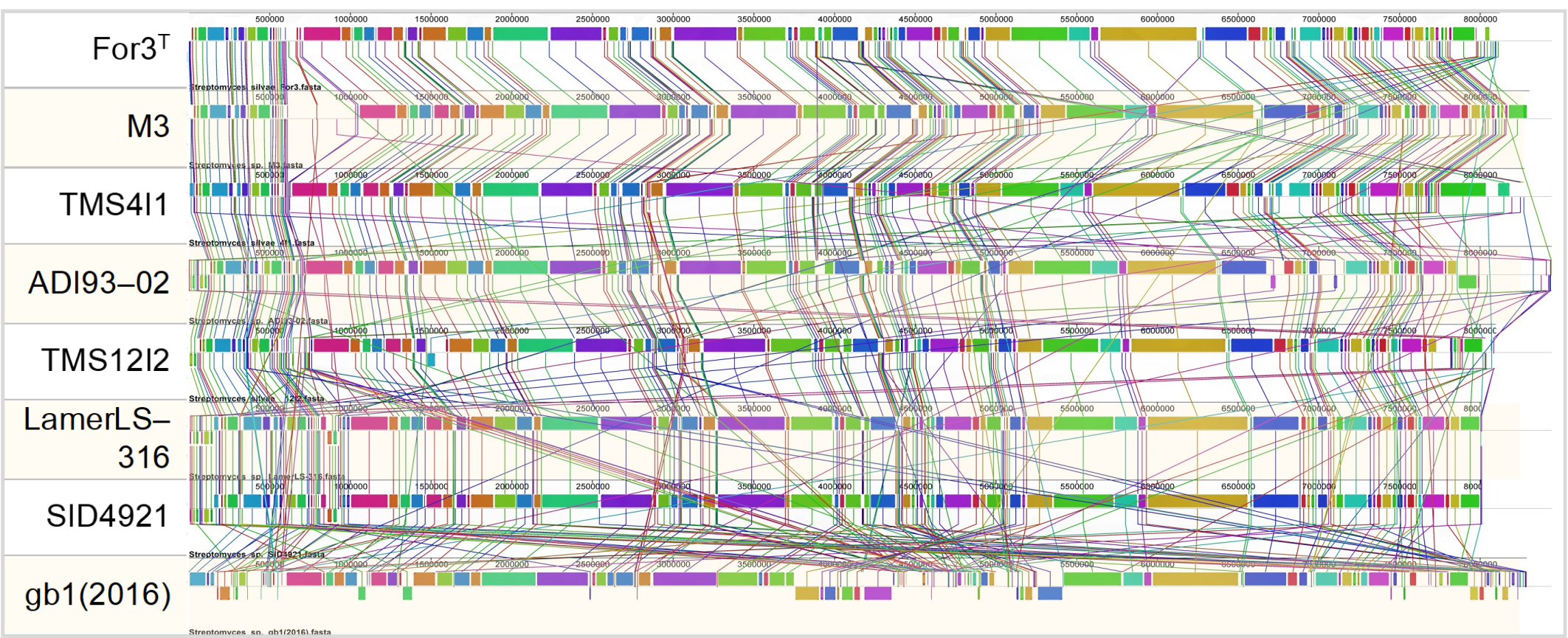
Streptomyces sp. LamerLS–316 and SID4921 show complete synteny, consistent with their 100 % ANI identity.
Streptomyces sp. gb1(2016) exhibits the strongest rearrangements, fragmentation, and inversions within the clade.
Genome organization remains broadly conserved across the clade, indicating strong relatedness at the level of overall chromosome structure. At the same time, local rearrangements point to microevolutionary differentiation, especially in gb1(2016), while several other strains remain comparatively stable.
Biosynthetic gene clusters (BGCs)
antiSMASH-based profiling reveals both a conserved species-level set of biosynthetic traits and additional strain-specific or weakly characterized clusters that expand the metabolic landscape of the clade.
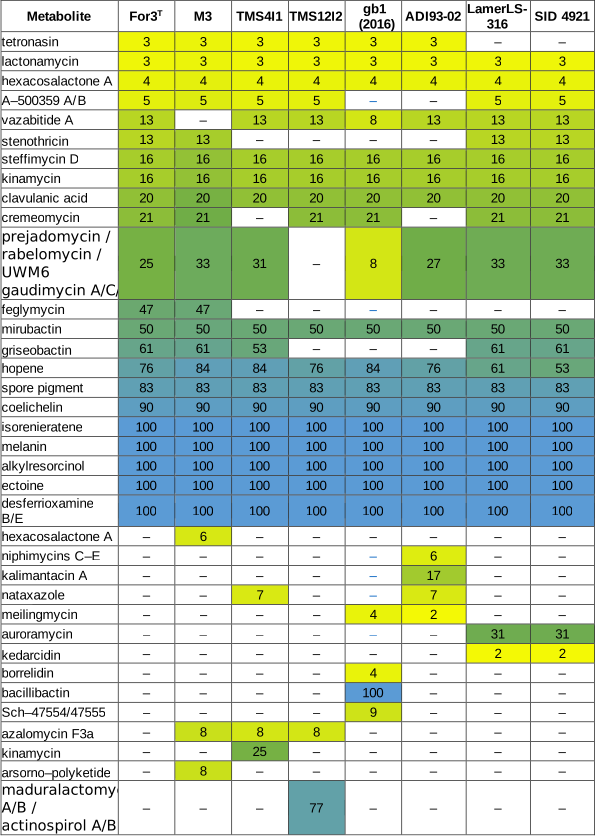
Shared core clusters include isorenieratene, melanin, alkylresorcinol, ectoine, and desferrioxamine B/E, each showing complete correspondence to known references.
Streptomyces sp. gb1(2016) and ADI93-02 contain the highest number of uncommon or unique clusters, indicating increased biosynthetic diversification.
The BGC profiles indicate that S. silvae combines a conserved metabolic backbone with additional strain-specific biosynthetic traits. Clusters annotated with very low similarity values, including examples such as tetronasin, lactonamycin, and hexacosalactone A, may reflect strongly diverged or previously uncharacterized pathways.
Methods summary
Genome assembly and read processing were carried out in Galaxy, with RagTag used for reference-guided scaffolding against Streptomyces sp. M3. ANI values were calculated with FastANI, whole-genome alignment used progressiveMauve, and BGC prediction was performed with antiSMASH 7.0.1.
Summary
Comparative genomics of the S. silvae clade reveals a taxonomically coherent yet evolutionarily dynamic species group. High ANI values support species-level unity, whereas genome-wide alignment and BGC profiling uncover structural plasticity and diversified biosynthetic potential among strains.